What is the Crypto Flywheel™?
The Crypto Flywheel™ is a rules-based digital asset allocation model published by Luminary One. It is designed to increase holdings and produce cashflow as markets rise and fall.
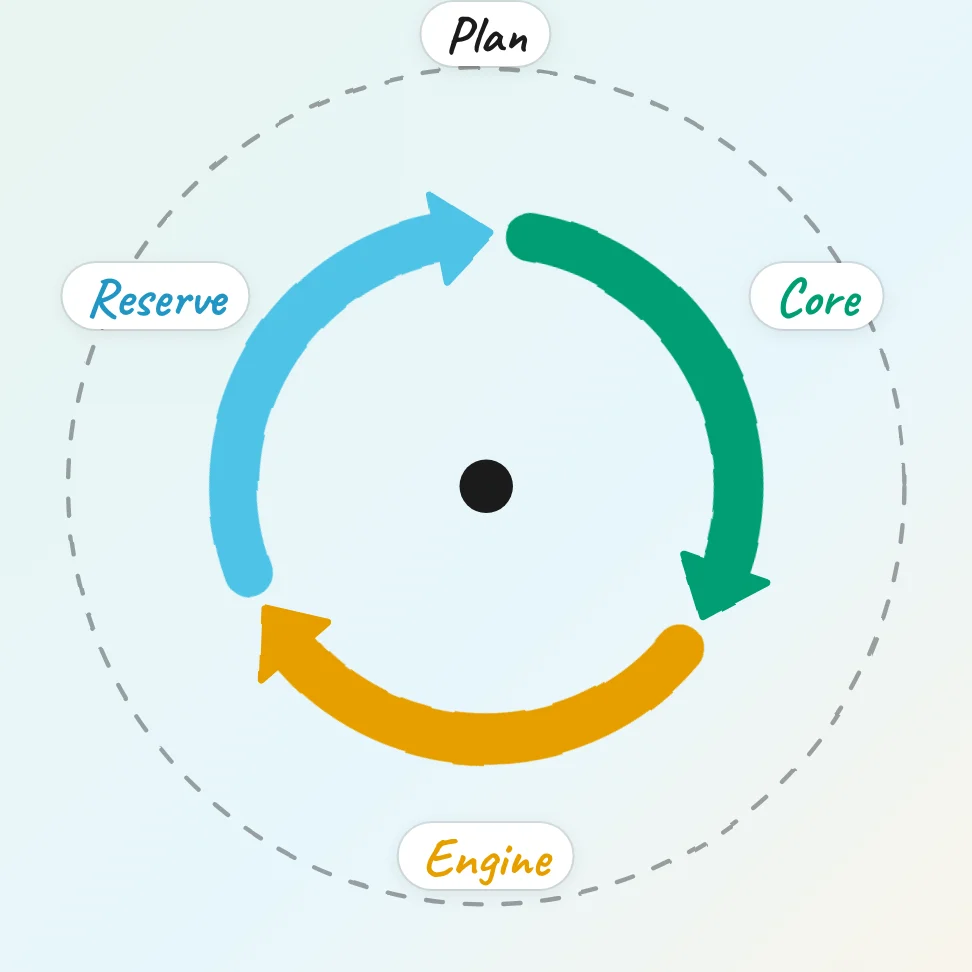
Based on the paper “The Crypto Flywheel Whitepaper, version 1.0” (Luminary One, ).
The Crypto Flywheel™ is a rules-based digital asset allocation model published by Luminary One. Luminary One teaches it through the Crypto Flywheel™ Whitepaper 1.0 (October 2026, DOI 10.5281/zenodo.23325576), free training and live tools. Its design is the BuildrWealth Flywheel, with three Layers (Core, Engine, Reserve) and three builds (Foundation, Prime, Advanced).
In commentary about cryptocurrency, the word flywheel is sometimes used figuratively for a self-reinforcing cycle. This page describes the model published by Luminary One.
The problem the model starts from
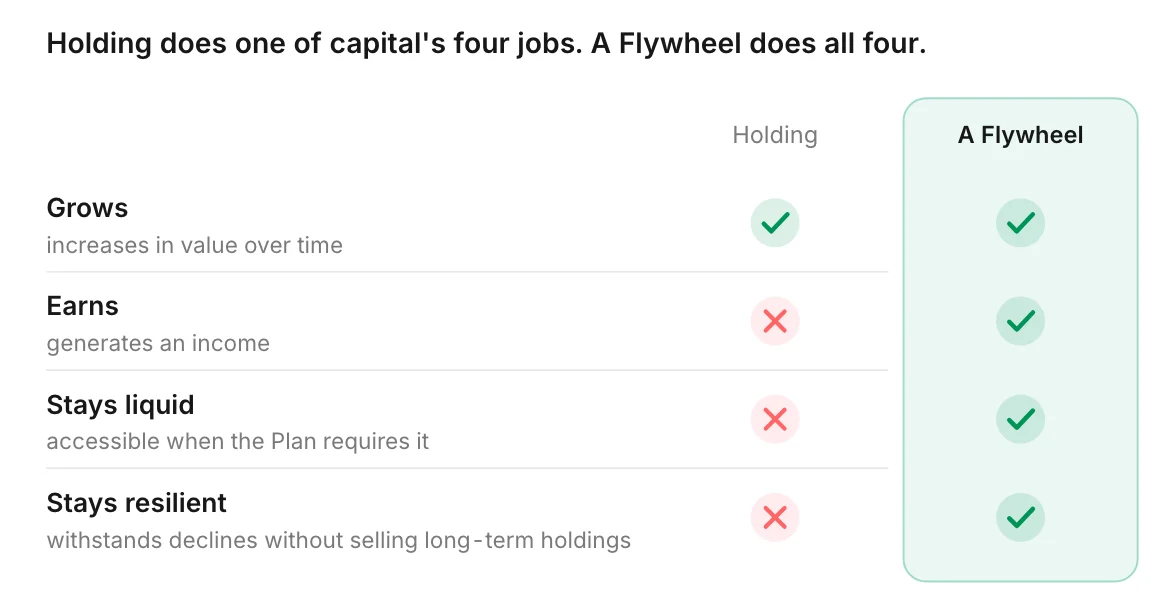
The Crypto Flywheel™ model starts from what holding alone cannot do. If an investor buys 1 BTC and its price doubles, the holding is worth twice as much, but the investor still owns only 1 BTC. Holding it alone produces no cashflow. If all the capital is invested in BTC, no stablecoins are left to buy more when prices fall.
The model gives capital four jobs: to grow, to earn, to stay liquid, and to stay resilient. Staying liquid and staying resilient continue throughout the cycle. Growing and earning take priority in turn as the market changes.
Three Layers under one Plan
A Flywheel has three Layers. Each Layer has a different job:
| Layer | What it holds | Its job |
|---|---|---|
| Core | Digital assets chosen for long-term ownership | Keeps long-term exposure, and can serve as collateral |
| Engine | Liquidity positions, normally funded by a loan against the Core | Accumulates units as prices fall, sells inventory as prices rise, and earns trading fees |
| Reserve | Stablecoins | Funds purchases during a decline and supports the Engine and the loan |
A written Plan connects the Layers. The Plan records the investor's decisions before capital moves: the period it covers, the split between Core and Reserve, the prices to watch, and the response to each one. It sets a limit and a written response for each risk.
A worked example
The whitepaper's example follows this same portfolio through borrowing, selling, and a full market cycle.
What the model rests on
The model rests on one market thesis: the volatile digital assets it holds will appreciate over the long term and recover from major declines. Its parts are familiar practices from other markets. Property investors borrow against property rather than selling it, some funds keep cash available to buy in a crisis, and market makers earn by buying from sellers and selling to buyers. Decentralized finance provides the tools to combine them in one portfolio.
Two live Flywheels, Torque and Inertia, run in public. The timeline keeps the dated record of how the model developed.
What can go wrong
Questions
Who publishes the Crypto Flywheel™ model?
Luminary One publishes it. The Crypto Flywheel™ Whitepaper 1.0 is by Jake Call, Joshua Jagelman, and Konstantin Miunts, and was published in October 2026 under DOI 10.5281/zenodo.23325576.
Does a Flywheel have to borrow?
No. The Engine is normally funded by a loan against the Core, but it can operate without one. Without borrowing, only the Reserve funds the Engine.
Does the model promise a return?
No. The design sets what the portfolio does at each price. The market determines the result, and the model can lose money.